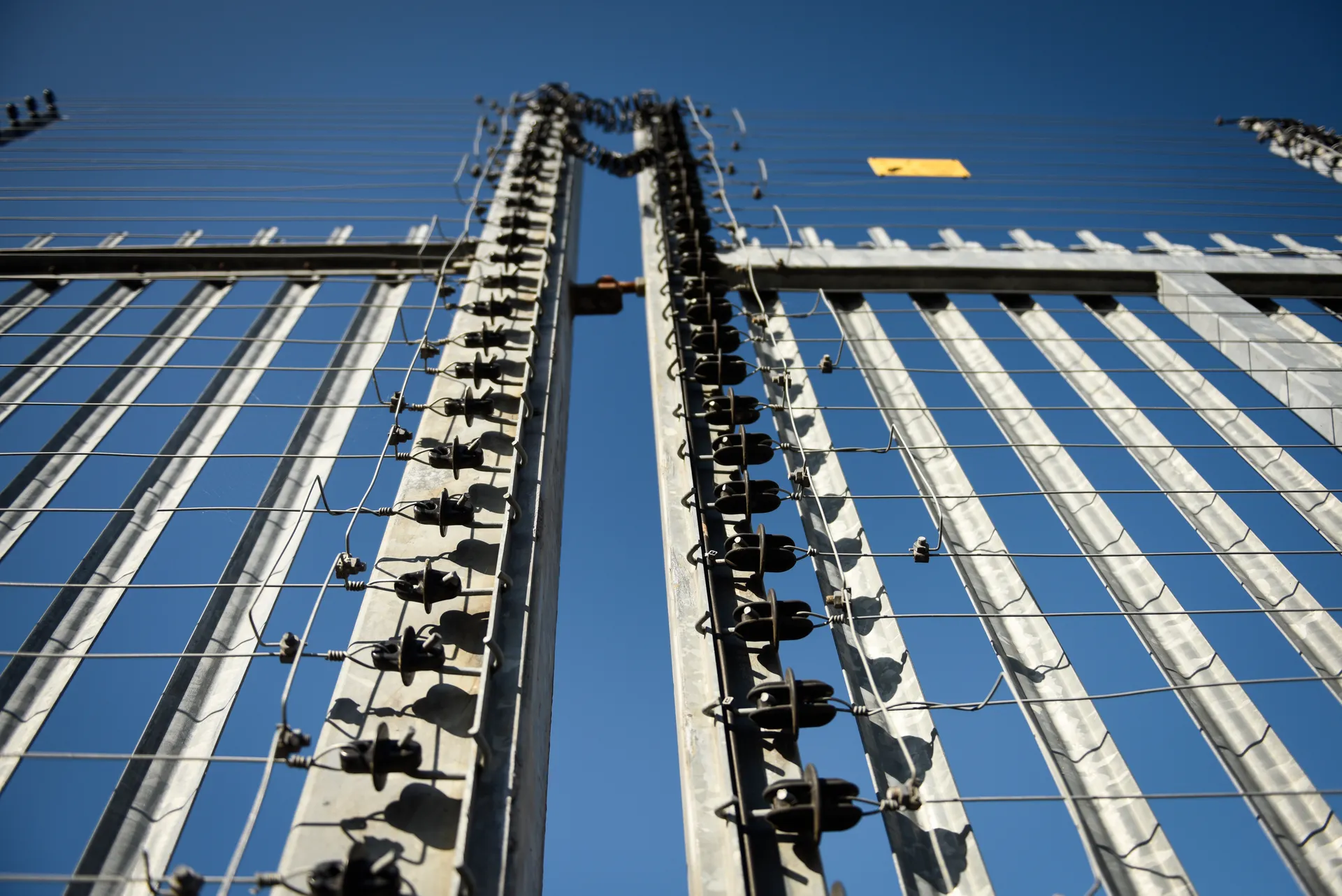
Sector Guide
Critical Infrastructure Perimeter Security
How critical national infrastructure perimeters are specified in the UK, what the assurance language means, and how APS electric fencing and detection fit the requirement, from a manufacturer whose equipment is listed in the NPSA Catalogue of Security Equipment.
Perimeter security for critical national infrastructure
Critical national infrastructure is the set of assets a country cannot do without: electricity generation and distribution, water treatment, gas and fuel, communications, transport hubs, and the government estate that runs them. Most of it is physically ordinary. A substation is a fenced compound on the edge of a town. A water treatment works is a few buildings and some tanks. What makes them critical is not what they look like but what stops when they are attacked, and that is why their perimeters are specified differently from a commercial yard.
The threat is wider than terrorism
- Metal theft. Copper earthing and cable theft from substations and rail infrastructure is the most frequent attack on CNI and causes real outages.
- Protest and sabotage. Energy and water sites are targets for direct action, which looks like intrusion to a perimeter system and needs the same response.
- Hostile reconnaissance and targeted attack. Lower frequency, highest consequence, and the reason assured equipment and auditable detection are required rather than preferred.
- Insider and contractor access. Gates and service entrances, again, are where perimeters fail.
What a substation break-in actually costs
Public examples, none of them APS projects:
- St Helens: substation raiders caused a power cut to 4,000 homes. ScottishPower
- Salford: a thief stole around £2 of copper and cut power to more than 200 homes. Express & Star
- Preston: thieves started a substation fire, cutting power to 1,000 homes and businesses. Lancashire Post
- Lancashire, 2019: a break-in caused £30,000 of damage to a substation. Electricity North West
- Bolton, 2019: vandals caused six-figure damage at a substation. Electricity North West
- Moore County, North Carolina, 2022: gunfire on two substations left around 40,000 customers without power for several days. Wikipedia
How a CNI perimeter is specified
UK CNI operators and their consultants work to a recognisable process and vocabulary. A specifier who sees it reflected on a supplier's page knows they are dealing with someone who has done this before.
Operational Requirement
The site owner defines what the perimeter must achieve, against which threat, with what response, before any product is named. APS supports this stage with site surveys and drawings.
NPSA assurance
The National Protective Security Authority (formerly CPNI) tests security equipment and lists what passes in its Catalogue of Security Equipment. Electro-Fence™ and Flexiguard™ are both listed. Flexiguard™ sits under Detection Systems, Barrier Mounted Detection, tested to the Barrier Mounted PIDS Evaluation Standard v3.0 on a 2.9 m anti-intruder weld mesh fence built to BS 1722 Part 10, with two runs of sensor cable on the barbed wire topping and the fence fabric. The assured configuration is FS-210 sensor cable with the FS302 analyser, fixed with metal cable ties in addition to plastic ones; APS installs to that configuration so the assurance holds on your site.
Standards
BS 1722-17:2017 for the design, installation and maintenance of electric security fences, including automatic isolation of the fence when a gate opens; BS EN IEC 60335-2-76 for energiser safety; BS EN 60529 ingress ratings. LPS 1175 rates the physical fence itself. APS detection and electric fence systems mount on any fence type, LPS 1175 rated or not, and leave that rating unaffected.
Layering
NPSA guidance expects deter, detect, delay and respond to be addressed as separate layers, to Protection Level BASE or ENHANCED. A single product rarely satisfies all four.
Performance
Probability of detection, nuisance alarm rate and false alarm rate, measured by zone, are how CNI specifications describe detection. APS points to the NPSA assessment as the evidence, and designs and tunes to the limits operators set, typically no more than five unwanted alarms per kilometre per day.
What a network operator's specification asks for
A UK distribution network operator's perimeter security technical specification, which APS electric fence and Flexiguard™ systems are designed to meet, sets out the kind of requirements a CNI buyer should expect to see:
- The perimeter must deter, detect and delay unauthorised access, to NPSA Protection Level BASE or ENHANCED.
- Designed against a novice intruder attempting to climb, cut or burrow, using hand tools, a ladder or a petrol disc cutter.
- No more than five unwanted alarms per kilometre per day.
- Detection zoned in 50 m sections with no more than two cameras per zone; each gate is its own zone.
- Electric fence split into zones: the lower fence runs in detection-only, low-voltage mode while staff are on site, and the topping above 2.4 m stays at high voltage. Upper and lower zones are monitored by different controllers so a single failure cannot disable both.
- Red, amber and green status lights at each entry reader, and a fence check staff can run from inside the site.
- Electric fence isolated automatically when a gate opens 50 mm, per BS 1722-17:2017.
- A certificate of conformity confirming design, installation, commissioning and testing to the NPSA level.
How APS equipment fits a CNI specification
All of it is designed and built in Stirling, with in-house repair and spares for current and legacy systems, which matters to operators planning twenty-year asset lives.
Proven In The Field
Substations and energy sites
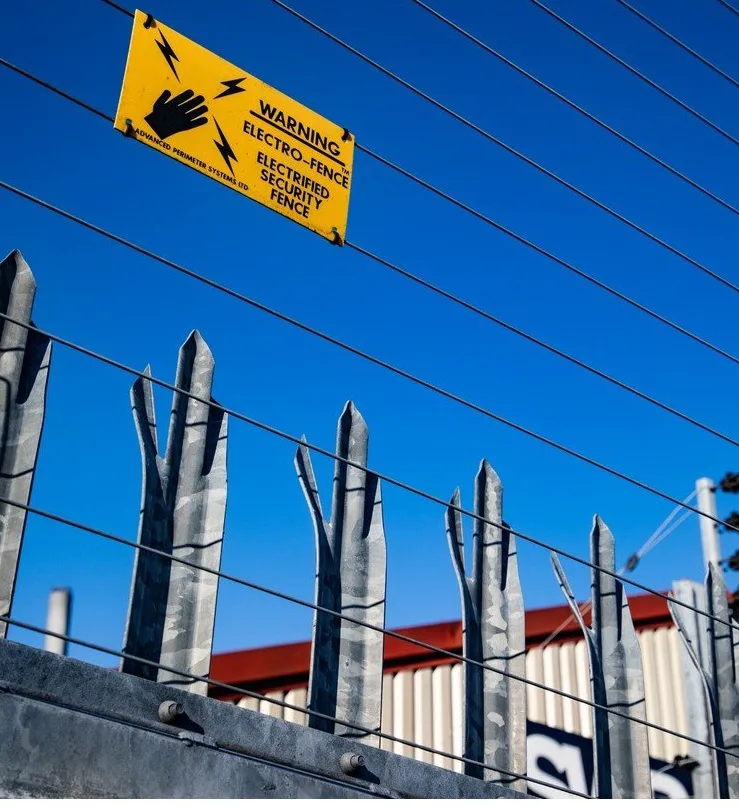
Unmanned distribution and transmission substations are the CNI site APS sees most often. They are small, numerous, remote and attractive to metal thieves. An Electro-Fence™ topper on the existing palisade deters climbing over, Flexiguard™ on the lower fence detects breaking through, and alarms route to the operator's control room or a monitoring station with the camera for that zone. Battery energy storage plants bring the same requirement to new-build sites, where the fence, gates, posts and topper can be designed as one system.
 Utilities & Energy
Over the fence or through it: zoned detection for a substation
An Electro-Fence™ topper and Flexiguard™ vibration detection cover different routes of intrusion at a substation, with zones of 50 m or less that call up CCTV verification.
Read more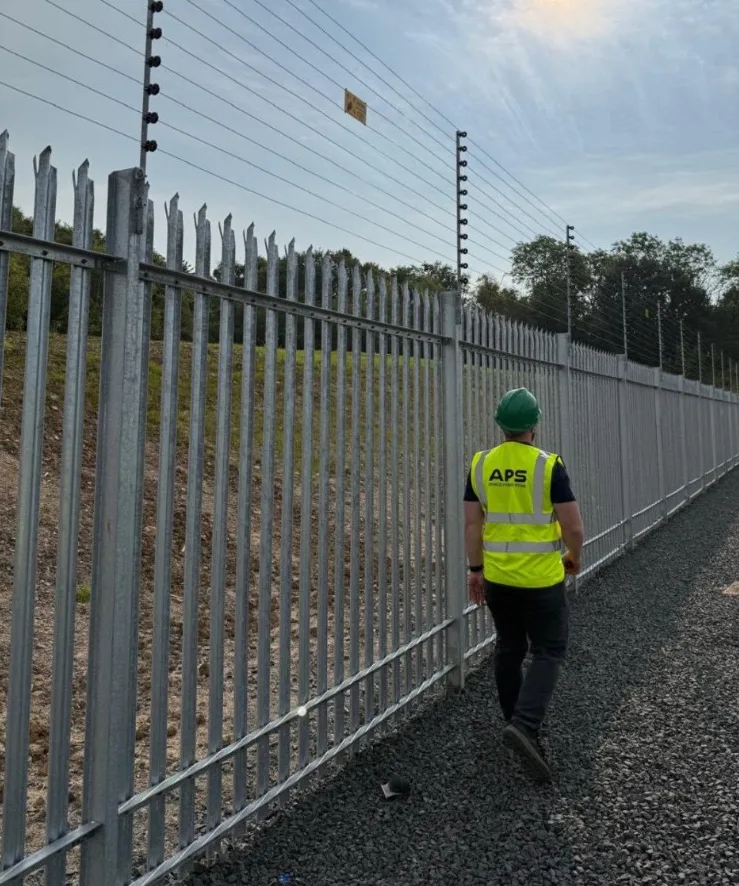 Utilities & Energy
BESS security built in during construction
A 1 m electric fence topper across 390 m of security fencing at a new battery energy storage plant, with the gate and post layout designed around it and alarms linked to the plant’s SCADA software.
Read moreFAQ
Critical infrastructure perimeter questions, answered.
What does NPSA assured mean?
The product has been tested by the UK National Protective Security Authority (formerly CPNI) and listed in its Catalogue of Security Equipment, which critical national infrastructure operators use to select equipment.
Which APS products are NPSA assured?
Electro-Fence electric fencing and Flexiguard fence-mounted detection. Flexiguard is listed under Detection Systems, Barrier Mounted Detection, tested to the Barrier Mounted PIDS Evaluation Standard v3.0.
Can an electric security fence be fitted to an existing substation fence?
Yes. Electro-Fence retrofits to palisade and mesh fencing, and APS energisers also retrofit to existing third-party electric fence systems.
What standards apply to electric security fencing in the UK?
BS 1722-17:2017 for design, installation and maintenance, and BS EN IEC 60335-2-76 for energiser safety.
Does APS supply LPS 1175 rated fencing?
No. LPS 1175 rates the physical fence. APS detection and electric fence systems mount on any fence type, including LPS 1175 rated fencing supplied by a fencing contractor, and the rating of the fence is unaffected.
Can APS publish detection performance figures?
APS points to the NPSA assessment as the evidence of detection performance. Specifications typically require no more than five unwanted alarms per kilometre per day, and APS systems are designed and tuned to meet that.
Talk To The Manufacturer
Writing a CNI perimeter specification?
Send us the operational requirement, or the site and the threat, and an APS engineer will come back with a zoned design, the assurance evidence and the drawings your consultant needs.
Request a CNI perimeter assessment
No obligation. Specification, assurance and retrofit questions welcome.